Dataverse: a marketplace for data owners and data consumers
A decentralized network letting data owners monetize and control their data, while giving analysts and data teams faster access to what they need.
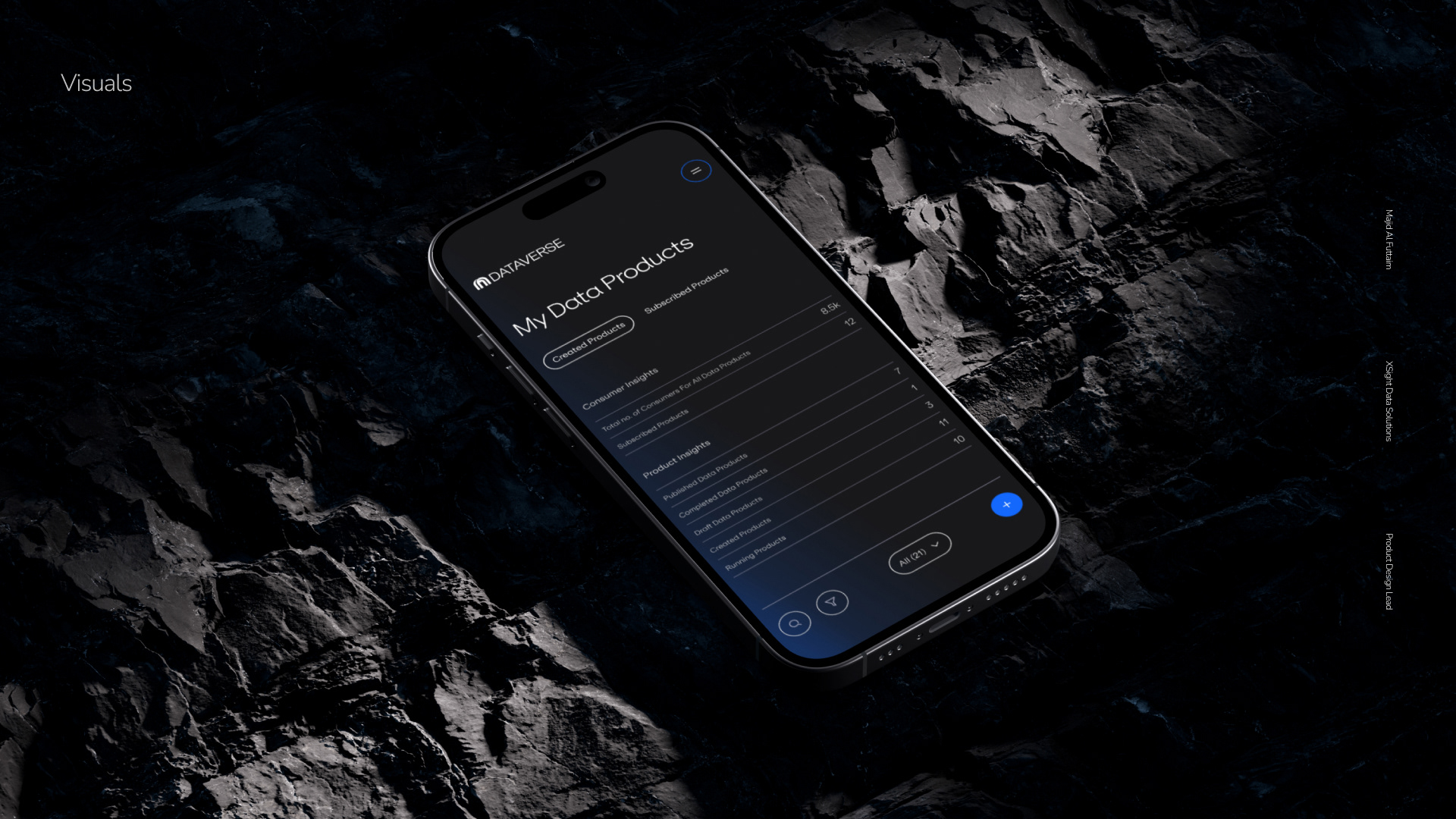
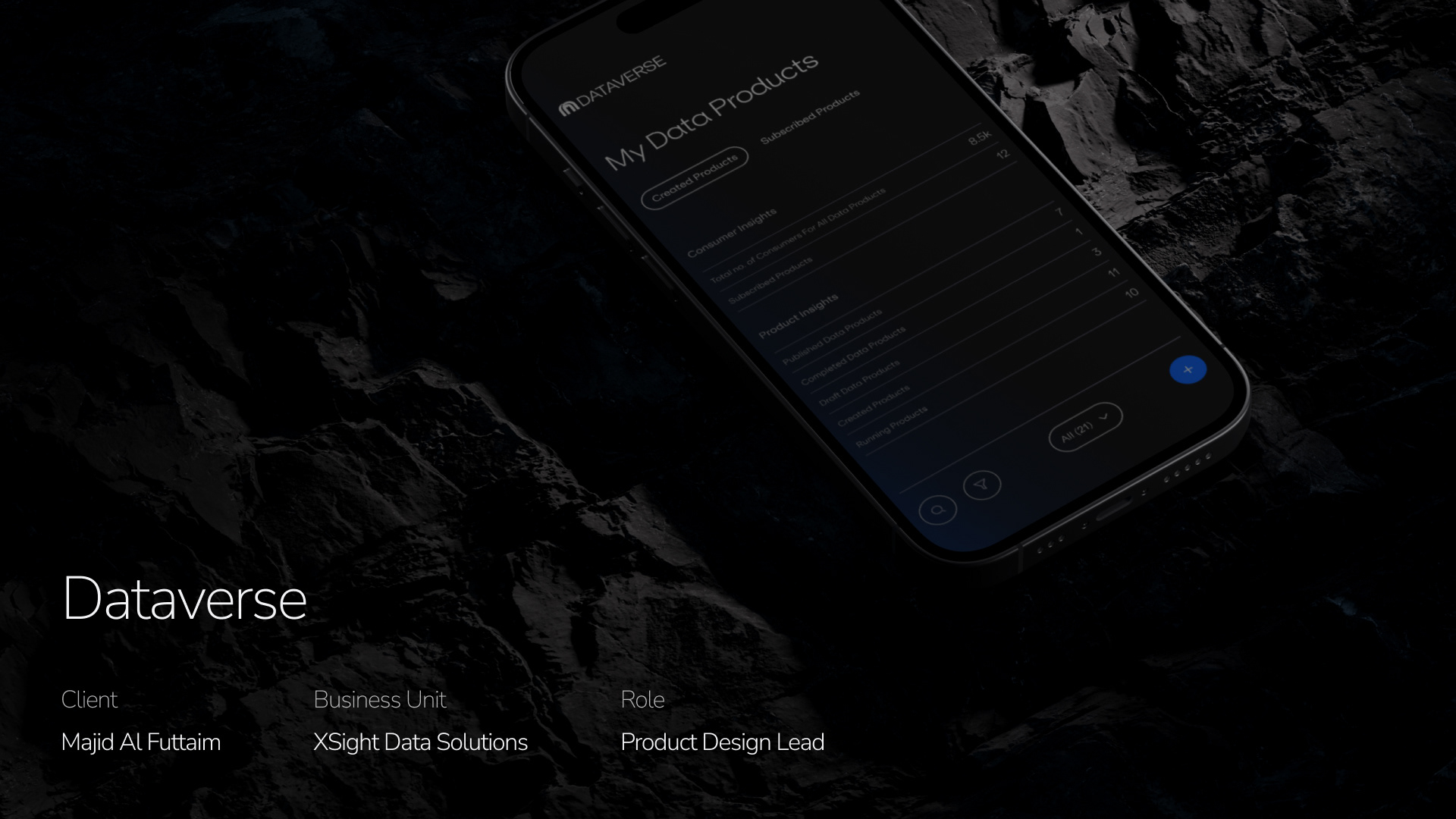
Dataverse was a decentralized network designed to let data contributors collaborate and monetize their data while preserving privacy. Contributors would keep full control over their data, with the option to unplug at any time.
I led a lean team here: a UX researcher, two product managers, and engineering.
The business problem
Two sides of the same problem shaped the brief:
The data owner. As companies grow, their data grows in scale and complexity with them. Poor data management, lack of governance, and processes that can't keep pace with data growth were becoming a real constraint on the business.
The data consumer. The consumer industry had gone through rapid change: shifting consumer behaviour, new market trends, and policy updates, all putting pressure on businesses to find innovative data solutions to stay competitive.
Research
We ran 8 interviews across the target audience (data analysts, data scientists, data engineers, data department heads, and product managers) to understand current ways of working and where the friction actually was. Recurring pain points included:
- "The process of getting data engineers to clean the data and build a pipeline can be very time consuming."
- "The big problem is finding the data you need."
- "Gaining access to real-time data from external sources can be a challenge."
Key takeaways
The research pointed to three product priorities: data products built from clean, easy-to-use data; a data marketplace with advanced search to solve the "finding the data" problem; and data products built on reliably real-time sources.
Design system
As with Connect, we were operating with little precedent to benchmark against, so we worked in tight iteration cycles, testing early and adjusting fast rather than committing to a long build based on assumptions.
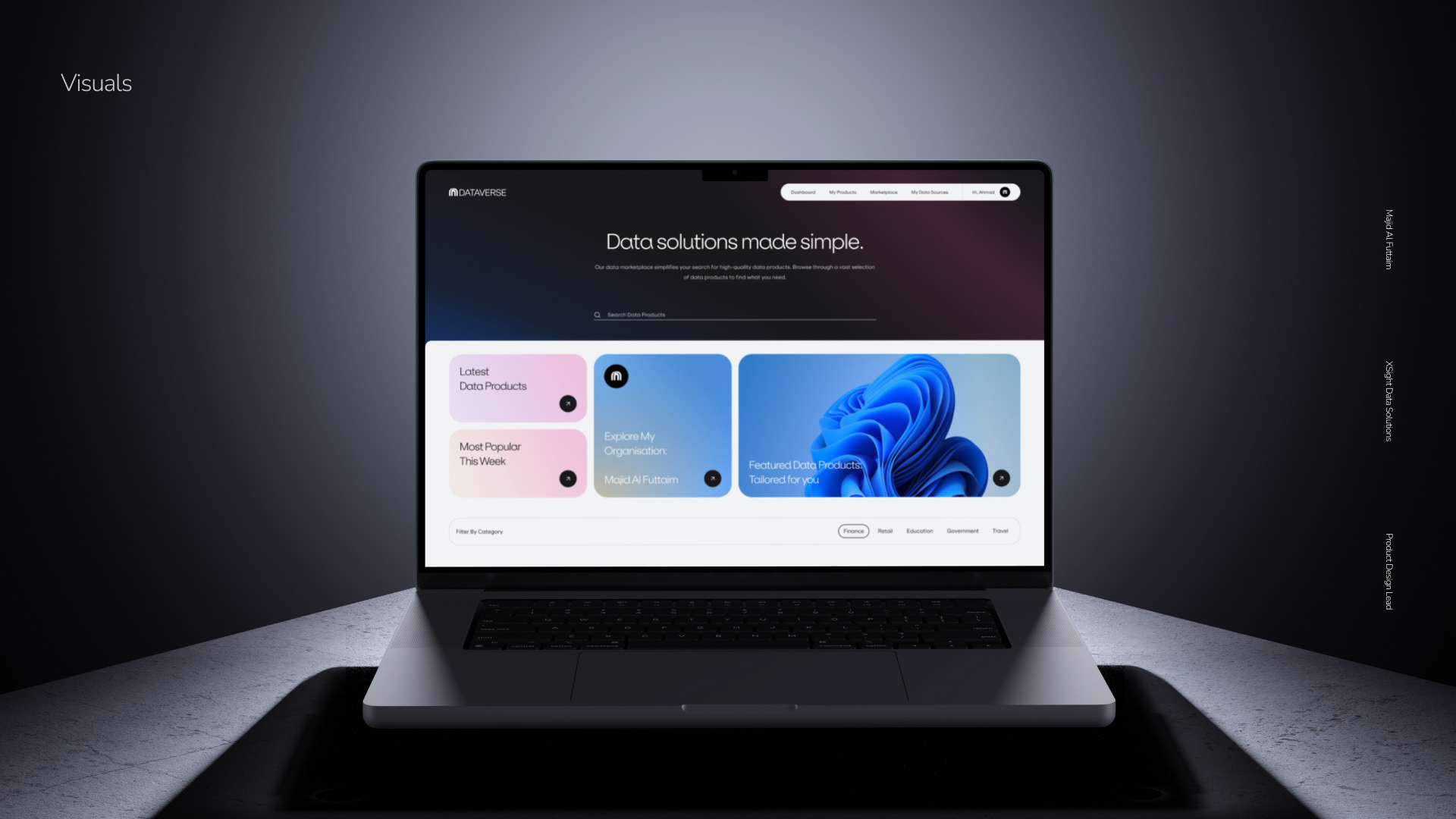
We built the interface on an Atomic Design System developed in collaboration with engineering, with a defined handoff process from UI sign-off through component documentation, dev build, and into a shared component library.
Outcome
Dataverse was shelved before it launched. The business shifted its focus to profitability, and a new data marketplace wasn't part of that plan. The product itself was solid: it opened up the idea that data could be monetised and made easily accessible to other organisations, and that thinking carried forward even though this specific version never shipped.
- Year
- 2022
- Team
- XSight Data Solutions, Majid Al Futtaim